Wheelchair accessible vans
By emilyqscis •
Travelling in a Wheelchair Accessible Van
Travelling while seated in a wheelchair requires thoughtful planning to ensure safety, comfort, and smooth access. The following key considerations can help guide the selection and setup of a suitable wheelchair accessible van.
Travelling as a Passenger
Vehicle Size and Capacity
- Does the driver have the skills and confidence to safely load, unload, and secure the wheelchair user?
- Is there enough space to carry additional items beyond the wheelchair user?
- Will the vehicle need to accommodate other essential equipment such as a hoist, shower commode, or mattress?
- How many passengers need to travel in the vehicle?
Access Into the Vehicle
- Will the person require a platform lift or a ramp?
- Should access be from the rear or the side? Consider vehicle type, cost, wheelchair size, and available space in parking areas.
- What head clearance is required for the wheelchair user?
- Is the width of the ramp or lift suitable for the wheelchair?
Securing the Wheelchair
- Does the vehicle have designated tie‑down points?
- Does the wheelchair have compatible tie‑down points?
- What securement system will be used, and who will be responsible for applying it?
Wheelchair Position Inside the Vehicle
- Consider whether a front or rear seating position offers better access, visibility, and comfort.
- Think about the user’s view through windows and the overall ride quality in that location.
Wheelchair and Vehicle Compatibility
- How will the wheelchair be loaded in and out of the vehicle?
- Examples:
- Rigid, lightweight manual wheelchairs with removable wheels or foldable backs may suit independent stowage.
- Folding‑frame manual wheelchairs often work well with rooftop stowage systems.
- Is the weight of the power wheelchair within the safe working load of the hoist, lift, or stowage device?
- For travelling while seated in the wheelchair, ensure the chair has appropriate tie‑down points or is compatible with a docking system.
- More information on selecting a manual wheelchair: link to be added
- More information on selecting a power wheelchair: link to be added
Van entry options
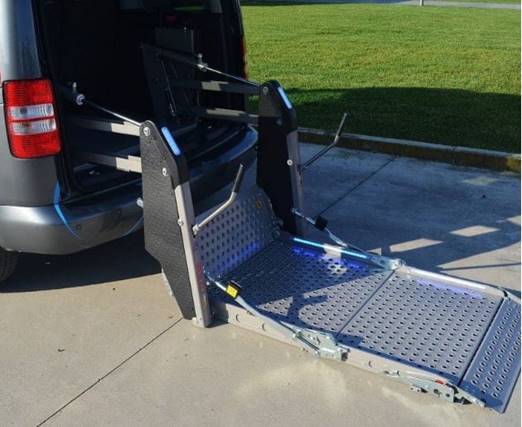
Platform lift
Image: totalability.com.au/
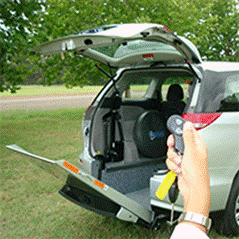
Ramp access with lowered floor
Image: freedommotorsaustralia.com.au
Wheelchair securement (travelling seated in a wheelchair)
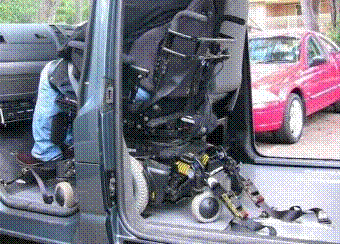
Tie down points
Image: at-aust.org
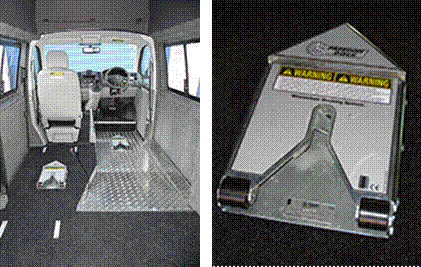
Docking system
Image: freedommotorsaustralia.com.au
The Department of Transport and Main Roads wheelchairs and mobility scooters guide for safe travel in Queensland advises:
- Where possible, The Australian Standard on the Safe Carriage of Wheelchairs recommends it is safest to sit in a vehicle seat.
- If a person needs to remain in a wheelchair the passenger must be forward facing, restrained with a lap-sash and the mobility device must be appropriately secured.
Wheelchair location options (travelling seated in a wheelchair)
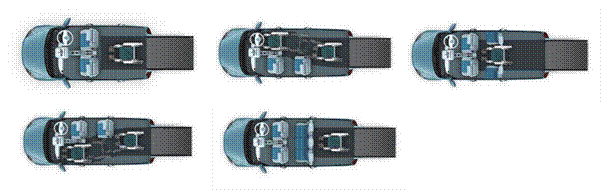
Example of seating configuration options
Image: freedommotorsaustralia.com.au
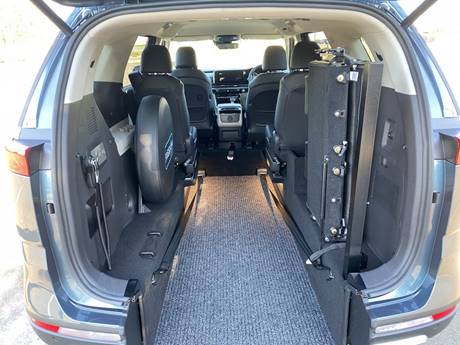
Example of rear wheelchair location with ramp access
Image: freedommotorsaustralia.com.au
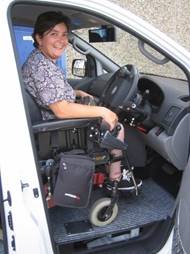
Wheelchair location: drivers seat
Image: freedommotorsaustralia.com.au
Lived experience
Hand controls example. Source: eLearnSCI Vimeo
Other modifications to accelerator not pictured
- Foot cradles (to keep feet clear of pedals)
Driving – controls
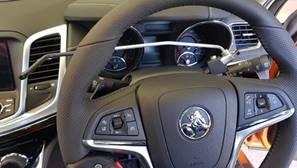
Indicator / wiper extension for person who requires access on opposite side
Image: rebenmobility.com.au
Other modifications to controls not pictured
- Handbrake extension
- Adaptations to gear controls
- Adapted mirrors
- Keyless ignition
Driving – postural securements
Posture & securements
- Electronic adjustable seats
- Harness seat belts
These should be assessed and recommended by a driver-trained OT and may require consultation with a rehabilitation engineer and accredited vehicle modification supplier.