Indwelling catheters
Urethral and suprapubic catheters
A urethral catheter (also called an indwelling catheter, or IDC) is inserted into the bladder via the urethra. An IDC is generally used as an interim option, but is sometimes used long-term. The Queensland Spinal Cord Injuries Service recommends using a size 16Fg silicone catheter for adequate patency and use of non-allergenic materials. Potential complications from long-term use can include meatal stenosis and urethral trauma.
A suprapubic catheter (SPC) is surgically inserted into the bladder via the abdominal wall. The Queensland Spinal Cord Injuries Service recommends using at least a size 16Fg silicone catheter for adequate patency and use of non-allergenic materials. The stoma site must be given time to heal prior to the first SPC change.
Both IDCs and SPCs will be connected to free drainage systems such as a leg bag, although this can vary depending on personal preference. At night, the leg bag is connected to a large drainage bag or bottle. A bottle is often used in the community setting and is a more environmentally friendly option given it can be washed and reused.
People with a neurogenic bladder may have impaired sensation to the bladder area. This can increase the risks associated with free drainage catheter bags, which includes urinary tract infections and loss of normal bladder function. Catheter valves, or ‘flip taps’ offer a more discreet alternative, but can be unsuitable for some people, so it is important to seek appropriate advice from a health professional before use.
- Catheter change frequency in the community: every 4 weeks for IDCs, every 4-6 weeks for SPC. For hospital settings, consult the hospital policy for frequency.
- Wash around the catheter site and groin twice a day. Use plain soap and water, removing any crusting from the tip of the penis (this requires retraction of the foreskin if present), vulva and/or stoma site. This has been proven to reduce the incidence of catheter-associated urinary tract infections. Pat dry.
- Avoid kinking of the catheter tubing, as this can damage the balloon mechanism. Use a securement device if needed.
- If the person is getting out of bed, ensure an appropriate drainage bag, such as a leg bag, is connected. This will help reduce pulling on the catheter when undertaking any activity and can improve the visibility of the bag, helping the person to easily see when it requires emptying.
- Encourage a fluid intake of 2-3 litres of water per day, unless on fluid restrictions.
- Educate the person with a catheter to:
- Change clothing daily to reduce bacterial transfer to the catheter.
- Avoid using scented soap or talcum powder around the catheter.
- Never pull, remove, cut or put anything inside the catheter.
- The first SPC change should be completed at 6 weeks, as this allows the stoma site to form. This will reduce complications with the first change, such as premature closure of the site.
- SPC stoma site care prevents skin adhesions and erosion around the stoma:
- Gently roll the catheter between the thumb and forefinger once a day (preferably after a shower).
- Move the catheter in a cross (+) shape to allow the stoma to form.
- Form a small loop, then secure the catheter to the abdomen with tape. This protects the stoma site from trauma caused by the catheter pulling.
- Manage over-granulated tissue around the stoma site early.
- Plug in the night drainage bag/bottle directly to the end of the leg bag. Open the leg bag valve so urine will drain from the leg bag into the night bag/bottle.
- Hang the drainage bag below the level of the bladder. Bags should be raised off the floor in a hospital environment, to reduce transfer of bacteria to the system. The bottle can sit on the floor next to the bed in a home environment, as it is the person’s own flora and fauna.
- When changing the leg bag, check the hospital procedures before doing so. In the community, the process is a clean procedure rather than a sterile technique and the connection can be cleaned with soap and water.
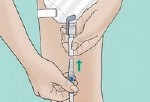
Connecting and changing a drainage or leg bag
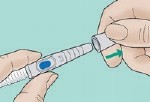
Connecting and changing a drainage or leg bag
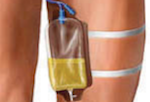
Leg bag prior to drainage
- Hand hygiene is the most important task to prevent catheter-associated urinary infection. Wash hands before and after handling the catheter, bags and/or bottle.
- If able, encourage the person to drain their own urine bag. Don’t let the tap and outlet touch any surface, such as the toilet.
- Empty the leg bag when it is two-thirds full to avoid pressure on the bladder.
- All disposable drainage bags (including leg and overnight bags) must be changed every 7 days (or as per manufacturer’s recommendations). Dispose of emptied, used bags in the garbage.
- A larger drainage bag or 4L bottle is ‘piggy-backed’ to the leg bag for night-time drainage.
- Clean the night bag/bottle daily. After emptying and disconnecting the night drainage bag/bottle, rinse the tubing and bag/bottle inside and out with tap water with the outlet clamp left open.
- A drainage bottle can be used for 6 months and the tubing changed every 3 months. It should be changed earlier if it is in poor condition, such as cloudy tubing or cracks.
- The bottle needs to be clean but not sterile. Clean as per the manufacturer’s recommendations.
- Leave the leg bag connected to the catheter. Drain the bag prior to getting into the water, to prevent the urine bag from overfilling.
- Change the wet leg straps or the leg bag holder as soon as possible after exiting the water, to avoid affecting the skin.
- Sexual activity may continue with a suprapubic catheter without any changes to the routine.
- If a male is participating in sexual activity with an indwelling urethral catheter, it is recommended to secure the catheter with tape to the erect penile shaft, then apply a condom over the top of the catheter. This will prevent potential issues with developing a urinary infection and prevent trauma of the meatus from the catheter movement.
- If a female is participating in sexual activity with an indwelling urethral catheter, make sure the indwelling catheter is secured to the leg, to prevent pulling on the catheter.
Troubleshooting tips for indwelling and suprapubic catheters
Below are some of the most common problems encountered, potential causes and recommended solutions.
Check for the following:
- Is the tubing bent or kinked?
- Is the bag below bladder level?
- Is the bag over full?
- Is the person dehydrated?
- Is the urine concentrated, cloudy or bloody? If yes, screen for a urinary tract infection: Management of UTI
- Does changing position help?
- Is there oedema in the lower limbs? This may impact urine output and should be discussed with the treating doctor and members of the allied health team who are trained in oedema management.
If the problem persists: Notify a doctor or nurse immediately. If residing in the community, attend the local hospital emergency department. If experiencing frequent catheter blocking, refer to Prevention of Catheter Blockages
Check for the following:
- Is the catheter draining? If no, see above.
- Is the urine concentrated, cloudy or bloody? If yes, screen for a urinary tract infection: Management of UTI
- Has the catheter been in place for more than 6 weeks? If yes, consider a catheter change.
- Could the person be experiencing constipation? If yes, consider management strategies: Bowel troubleshooting
If the problem persists: Notify a doctor or nurse immediately.
Seek immediate help from the local hospital or doctor. Early medical care increases the likelihood of getting the catheter reinserted without further surgery.
- Always insert 50ml of water into the bladder prior to changing the SPC. Anecdotally, this has been shown to:
- Reduce bladder spasticity by making it easier to reinsert the catheter
- Help maintain the ‘shape’ of the bladder and assist with lining up the two stoma openings of the bladder and exterior site.
If the problem persists: It is recommended that an indwelling urethral catheter is inserted (if possible) to avoid over-stretching the bladder.
- Check valve for damage.
- Add 2-3ml of sterile water to the inflation channel to dislodge debris.
- Attach a syringe to the valve and leave in place for 20-40 minutes.
- Squeeze visible tubing to dislodge any crystal formation in channel.
If the problem persists: Seek medical advice and/or present to the local hospital or emergency department.
Check for the following:
- Make sure the catheter moves freely in the stoma site, and there are no adhesions.
- Never forcibly remove water from the balloon, as this can increase the risk of catheter ‘ridging’. Ridging appears as raised or wrinkled areas over the balloon and is usually a sign of an issue in silicone catheters. A contributing factor is that silicone has no ‘memory’ and does not return to its original shape, which can create ridging issues. The correct method is to attach the syringe to the valve and allow the water to drain into the syringe on its own.
- If there is suspected crystal formation, add 2-3ml of sterile water to the inflation channel to dislodge debris. Squeeze visible tubing to dislodge any crystal formation in the channel.
- If still unsuccessful, instil 0.5-1ml of water into the balloon to remove any ridging in the catheter balloon. Some silicone catheters can be more prone to ridging than others. Try to remove the catheter with the water still in place.
- Place a hand around the stoma site, for support, and gently pull on the catheter to remove. If concerned about the amount of force required to remove the catheter, present to the local hospital or emergency department.
Changing a suprapubic catheter
- Sterile catheter pack
- Disposable under-pad
- Sterile gloves
- Plastic apron
- Mask
- Protective eyewear
- Sodium chloride 0.9% pour bottle
- Aqueous chlorhexidine 0.1%
- Water soluble lubricant gel
- Indwelling urinary catheter
- 50ml catheter-tipped syringe
- 10ml x 2 syringes
- 10ml ampoule of water for injection
- Urinary drainage bag
- Tape or other appropriate device for securing the catheter
- Protective bed pad (Bluey)
Which catheter should be used?
A 16-Fg silicone or hydrogel-coated catheter is standard. A smaller gauge catheter may be inserted initially and upsized with subsequent catheter changes, only if directed by a medical order.
Note: Always check the size of current the catheter in place and use the same size unless ordered otherwise.
How to change a catheter
1. Pre-catheter change checklist
- Check the person’s relevant documentation for information regarding the SPC.
- Ensure patient has no known allergies to any of the preparation equipment or gel being used.
- Explain the procedure.
- Position the person supine, ensuring comfort and privacy at all times.
- Place a protective bed pad on the person’s abdomen, below the SPC site.
- Measure and record the amount of urine in the drainage bag, if required.
2. Preparation
- Put on an apron, mask and goggles.
- Perform hand hygiene.
- Use an aseptic technique to open sterile equipment.
- Open sterile gloves on a clean bed, table or other firm surface.
- Fill one kidney dish with sodium chloride 0.9%.
- Repeat hand hygiene.
- Put on sterile gloves, using an open glove method.
3. Changing the catheter:
- Draw up 50ml of sodium chloride 0.9% with a catheter-tipped syringe. Another option is clamping the bag tubing and allowing the bladder to fill, after providing additional fluids.
- Draw up 10ml of water and test the catheter balloon.
- Place some water-soluble lubricant gel on the tip of the catheter and place in the second kidney dish. Place a fenestrated drape over the person’s lower abdomen leaving the SPC site and catheter/bag join exposed.
- Clean SPC site and catheter connection with aqueous chlorhexidine 0.1%.
- To maintain sterility of the dominant hand, use a sterile gauze square in each hand when disconnecting the urinary drainage bag from the SPC.
- Attach the filled catheter tip syringe to the catheter.
- Gently insert 50ml of sodium chloride 0.9% into the bladder and leave the syringe attached at the end of the catheter, or use the clamp and fill method. Always observe for signs and symptoms of autonomic dysreflexia, if the person is at risk.
- Deflate the catheter balloon with a syringe.
- Bring the kidney dish with the catheter over to the person and place it on the sterile fenestrated drape.
- Have the new catheter ready to go, holding it above the site in the dominant hand.
- Gently remove the SPC while gently rolling the catheter between the thumb and forefinger of the non-dominant hand.
- Immediately insert the new SPC, using the dominant hand.
- When urine returns, insert the catheter approximately 4cm further, to ensure the catheter is in the bladder and not the suprapubic tract.
- Do not push in further than 4cm, as the catheter tip can migrate through the sphincter into the urethra.
- Ensure the urine continues to drain freely.
- Inflate the balloon with sterile water.
- Connect the urinary drainage bag and secure the catheter.
- Return the person to a comfortable position.
- Dispose of all used equipment appropriately.
- Perform hand hygiene.
- Record the date of change, catheter size and catheter type, then plan for the next change in the person’s notes.
General Information
If urine flow does not occur, lubricant gel may be obstructing the catheter lumen. Use a syringe to irrigate the catheter to clear the gel
Reference: Princess Alexandra Hospital Procedure no: 01657/V6/08/2020
QSCIS acknowledges the Urology Department, Princess Alexandra Hospital for assistance in developing this webpage.
State of Queensland (Queensland Health) ‘Preventing CAUTI – Catheter-Associated Urinary Tract Infection eLearning Program’
Mitchell B, Curryer C, Holliday E, et al. Effectiveness of meatal cleaning in the prevention of catheter-associated urinary tract infections and bacteriuria: an updated systematic review and meta-analysis. BMJ Open 2021;11: e046817. https://bmjopen.bmj.com/content/11/6/e046817
Indwelling catheterisation in adults – Urethral and suprapubic | European Association of Urology Nurses – EAUN (uroweb.org)