Sleep-disordered breathing
The normal circadian rhythm of the body guides the sleep-wake cycle and resets approximately every 24 hours. Sleep is a complex physiological process, so that sleep disturbance and disorders are commonly seen in the general population. However, the risk is notably increased following a spinal cord injury (SCI).
Sleep disturbance
Data from the 2018–19 Aus-InSCI survey of 1,579 adults with SCI demonstrated a high prevalence of sleep disturbances following injury. Sleep problems were ranked among the top five secondary health conditions by 78% of participants. Furthermore, 30% reported sleep disturbances as severe to extreme, with 62% of these individuals indicating that their sleep problems were untreated.
A range of signs and symptoms that characterise sleep disturbance can be experienced during the night or the day. These include:
- insomnia, delayed sleep onset or sleep fragmentation
- snoring, gasping or choking during sleep
- abnormal leg movements during sleep
- excessive daytime drowsiness and fatigue
- reduced daytime executive functioning e.g. memory, concentration, decision making, reaction time, emotional regulation.
The development of sleep disturbance is multifactorial, and may include normal risk factors as well as those specific to SCI.
These include:
- high thoracic SCI, but especially a cervical SCI
- disrupted circadian rhythm affecting melatonin regulation (cervical SCI may result in an interruption of sympathetic innervation to the pineal gland)
- increased age
- gender specific risk profiles for males (anatomical factors) and females (post-menopausal factors)
- obesity and a large neck circumference
- laryngeal muscle weakness related to post intubation or cervical spinal surgery
- habitual supine sleep position
- chronic pain and discomfort issues
- high frequency leg movements during sleep
- need to complete intermittent bladder emptying overnight
- use of certain medications, including cardiac and antispasmodic agents
- elevated consumption of alcohol and caffeine
- use of sedatives and depressant substances
- environmental factors, such as temperature, noise and light
- psychological factors, including anxiety and depression.
Find SCI resources here.
Sleep disorders
Sleep disorders following SCI may include:
• sleep-disordered breathing (SDB), including both obstructive and central types
• movement-related disorders, such as restless leg syndrome and spasticity issues
• circadian rhythm sleep–wake disorders
• insomnia.
Sleep disturbances—particularly sleep disorders—can profoundly impact a person with SCI, affecting daily functioning, relationships, employment, and community participation. Untreated sleep disorders are associated with reduced quality of life and negative health outcomes, including chronic pain, depression, and cognitive decline.
Sleep-disordered breathing
SDB is of particular concern following SCI. A 2021 systematic review with meta-analysis reported that SDB in people with cervical SCI was prevalent at the following severity and rates: mild (83%), moderate (59%), and severe (36%). Increased prevalence was associated with older age. However, no statistically significant differences were found based on sex, body mass index, injury duration, injury completeness, or level of cervical injury.
Overall, the prevalence of SDB is reported to be 2-9 times greater in the SCI population, compared to the general population. Hence, SDB is a significant health issue to assess and manage.
The summary below outlines causative factors in the development of SDB following SCI, along with compounding factors.
Respiratory muscle weakness
- Cervical and high thoracic SCI can result in weakness and paralysis of the diaphragm, intercostal, and accessory respiratory muscles.
- Following extubation and cervical spinal surgery, upper airway muscles can become impaired.
- During REM sleep, the natural reduction in muscle tone can worsen airway collapse and hypoventilation associated with SCI, increasing the risk of developing obstructive sleep apnoea (OSA).
Central respiratory control disruption
- SCI can interrupt descending pathways from the brainstem respiratory centres to the spinal cord.
- During sleep, respiratory drive can be altered, increasing the risk of central sleep apnoea (CSA).
Autonomic nervous system disruption
- Cervical and high thoracic SC at or above T6, can result in ANS disruption, affecting control of upper airway tone and mucosal blood flow.
- During sleep, airway collapsibility and ventilation-perfusion mismatch can occur, contributing to both OSA and CSA.
Compounding factors
Compounding factors in the development of SDB following SCI are:
- habitual supine sleep position
- changes in metabolism and capacity to exercise, affecting body composition
- certain medications
- some lifestyle issues, such as hydration, substance use and sleep habits
- inadequate prophylactic respiratory health practices, such as secretion management.
Assessment
A comprehensive assessment should involve a multidisciplinary team, the person with SCI and their support network.
General assessment may begin with noting subjective and objective indicators of sleep disturbance, including completion of various sleep screening questionnaires.
Specific assessment of SDB ideally involves polysomnography, which is an overnight sleep study using full diagnostic instruments. These typically include:
- electrooculography (EOG)– to monitor eye movement to identify sleep stages
- electroencephalogram (EEG)– to record brain wave activity
- electrocardiogram (ECG)– to record heart electrical activity
- pulse oximetry– to record heart rate and blood oxygen saturations
- electromyography (EMG) leg sensors– to detect leg muscle contractions
- infra-red video surveillance– to record overall rest versus sleep, as well as global body positions and limb movements.
Following SCI, full polysomnography is preferred, with interpretation of results and treatment trials overseen by a sleep /respiratory physician—rather than a sleep scientist. This is due to the complex risk factors for SDB that must inform both the interpretation of sleep study results and the overall management plan.
The order of preference for sleep study settings is listed below, with some comments on considerations or limitations.
- Inpatient stay in a sleep clinic (with full diagnostics, including EEG)
This is strongly recommended for individuals with complex health needs or a history of significant respiratory admissions, as it provides the most comprehensive data and diagnostic detail about sleep and arousal.
The sleep clinic must accommodate specific access and care needs, such as:
- appropriate equipment (e.g. hoist, sling, electric bed, pressure-relieving mattress, commode)
- spacious rooms for equipment and safe manual handling
- support for personal care and medication routines.
2. At home or inpatient hospital stay (outside of a sleep clinic with full diagnostics, including EEG)
This setting requires portable equipment, which may have reduced signal quality and lacks on-site sleep technician support. These limitations can affect data accuracy and result interpretation about sleep and arousal.
3. At home with limited diagnostics (without full diagnostics, including no EEG)
This option provides only basic data (e.g. pulse oximetry) and limited diagnostic detail about sleep and arousal.
SDB often presents as a mixed pattern of obstructive and central sleep-disordered apnoea.
The apnoea–hypopnea index (AHI) is used as an outcome measure to diagnose and categorise SDB severity. It measures the total number of apnoea and hypopnea events per hour of sleep. In SDB, apnoea is defined as a period of no breathing for ≥10 seconds, while hypopnea is related to a ≥30% reduction in air flow, with a ≥3% drop in oxygen level or cortical arousal for ≥10 seconds.
An AHI score ≥ 5, is indicative of a degree of mild SDB, with increasing index scores attributed to increasing severity. People with SCI commonly experience a combination of both types of apnoea and hypopnea events.
Management
Untreated SDB following SCI is associated with a reduced quality of life and negative health outcomes, but also adverse health outcomes in comparison to the general population. These include a greater prevalence of lower respiratory tract infections, cardiovascular disease, hospitalisation, and ICU admissions. In addition to this, there is also a higher mortality rate from respiratory and cardiovascular conditions.
Therefore, SDB should be considered a high clinical priority in SCI management and promptly investigated. Completion of an initial sleep study should be followed-up by a repeat sleep study every few years—particularly as chronic respiratory dysfunction and ageing begins to impact respiratory health overall.
Lifestyle modifications and health management are important, but typically positive airway pressure (PAP) therapy during sleep is also required. A multidisciplinary team review is recommended to ensure a comprehensive approach and successful implementation.
Positive airway pressure therapy (PAP)
Forms of PAP therapy, including continuous positive airway pressure (CPAP), are commonly used in the treatment of sleep apnoea following SCI. PAP therapy treats both the obstructive and central components of SDB following SCI. PAP therapy is able to support upper airway patency, address nocturnal hypoventilation and compensate for aspects of autonomic dysfunction.
However, PAP therapy requires a significant investment in trialling and education to promote comfort and compliance, for therapeutic benefit. There is sufficient evidence to suggest that this is the primary reason why PAP therapy is not more readily complied with. Potential barriers which may limit use of PAP therapy should be considered and addressed as possible. These include:
- user tolerance—adjusting to the sensory and respiratory experience of assisted breathing during sleep
- impaired upper limb function—may affect mask donning and doffing, leading to:
- safety concerns
- claustrophobia
- insufficient overnight care support
- a lack of accessible funding for equipment
- limited implementation support from health professionals
- a perceived lack of benefit—user may not notice immediate improvements.
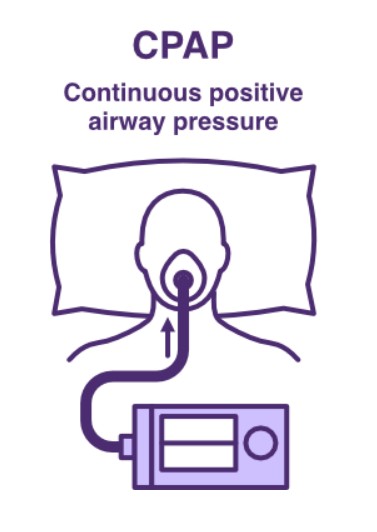
CPAP Ventilation
Adapted from SCIRE Professional
Mandibular advancement devices (MADs)
Given the challenges related to tolerance and comfort with PAP therapy, there is growing interest in trialling mandibular advancement devices (MADs) for people with SCI who have SDB. One recent study in this population has showed promising results, demonstrating significant reduction in AHI and daytime sleepiness, while also improved tolerance during sleep and adherence to regular use over time. Further research is required to explore the efficacy of MADs in SDB management and SCI as an alternative to PAP therapy.
Respiratory health management
Strategies may include:
- reviewing adequacy of overall ventilation support
- implementing lung volume augmentation
- improving secretion management
- treating other respiratory diseases e.g. chronic obstructive pulmonary disease
- reviewing hygiene practices
- implementing a respiratory action plan.
Other health and supports management
Strategies may include:
- addressing weight management through diet, exercise and caloric tracking
- adopting a side-lying sleep position instead of supine, where appropriate—considering pain, pressure relief routines and functional independence
- improving pain and spasticity management using stretching, positioning supports and medications
- reviewing medications that may impair sleep
- avoiding alcohol and caffeine, particularly in the evening
- implementing sleep hygiene techniques such as regulating room temperature, reducing noise and light, maintaining a consistent bedtime, and trialling relaxation strategies
- providing psychological support to address adjustment, anxiety, depression or other mental health concerns.
Discharge and community planning
A person with SCI who has SBD and needs to implement lifestyle and respiratory management, along with PAP therapy, may also need a review of their funding, care and health professional supports for community living.
For more information on these considerations, refer to Discharge and community planning.
Respiratory impairment in SCI (2025)
PM&R KnowledgeNow
Sleep disturbances following spinal cord injury: Understanding help-seeking behaviour and co-designing a sleep management resource
The Hopkins Centre: Research for Rehabilitation and Resilience
Sleep disordered breathing after SCI
SCIRE Community
Sleep problems and sleep apnea in persons with spinal cord injury
University of Washington Rehabilitation Medicine
Queensland Health Sleep Disorders Program: Information for clinicians
Queensland Health
Princess Alexandra Hospital Sleep Disorders Centre: Sleep history questionnaire
Queensland Health
Aboussouan, L. S., Badr, M. S., & Sankari, A. (2023). The quest for accurate evaluation and treatment of sleep-disordered breathing in spinal cord injury. Sleep, 46(12), zsad264. https://doi:10.1093/sleep/zsad264
Berlowitz, D. J., Brown, D. J., Campbell, D. A., & Pierce, R. J. (2005). A longitudinal evaluation of sleep and breathing in the first year after cervical spinal cord injury. Archives of Physical Medicine and Rehabilitation, 86(6), 1193–1199. https://doi.org/10.1016/j.apmr.2004.11.033
Berlowitz, D. J., & Graco, M. (2025). An update on sleep disordered breathing in spinal cord injury. Current Opinion in Pulmonary Medicine, 31(6), 584-590. https://doi.org/10.1097/MCP.0000000000001207
Berlowitz, D. J., & Graco, M. (2024). Not there yet: The challenge of treating sleep-disordered breathing in people living with spinal cord injury/disease. Sleep, 47(5), zsae068. https://doi.org/10.1093/sleep/zsae068
Graco, M., McDonald, L., Green, S. E., Jackson, M. L., & Berlowitz, D. J. (2021). Prevalence of sleep-disordered breathing in people with tetraplegia: A systematic review and meta-analysis. Spinal Cord, 59(5), 474–484. https://doi.org/10.1038/s41393-020-00595-0
Graco, M., Berlowitz, D. J., & Green, S. E. (2019). Understanding the clinical management of obstructive sleep apnoea in tetraplegia: A qualitative study using the theoretical domains framework. BMC Health Services Research, 19(1), Article 405. https://doi.org/10.1186/s12913-019-4197-8
Honzatková, L., Graco, M., & Kříž, J. (2025). Effectiveness of mandibular advancement device for obstructive sleep apnea in chronic spinal cord injury. Topics in Spinal Cord Injury Rehabilitation. https://doi.org/10.46292/sci24-00062 Awaiting publication
Middleton, J. W., Arora, M., Kifley, A., Clark, J., Borg, S. J., Tran, Y., Atresh, S., Kaur, J., Shetty, S., Nunn, A., Marshall, R., & Geraghty, T. (2022). Australian arm of the International Spinal Cord Injury (Aus-InSCI) Community Survey: 2. Understanding the lived experience in people with spinal cord injury. Spinal Cord, 60(12), 1069–1079. https://doi.org/10.1038/s41393-022-00817-7
Sankari, A., Bascom, A. T., Chowdhuri, S., & Badr, M. S. (2014). Tetraplegia is a risk factor for central sleep apnea. Journal of Applied Physiology, 116(3), 345–353. https://doi.org/10.1152/japplphysiol.00731.2013
Sankari, A., Bascom, A., Oomman, S., & Badr, M. S. (2014). Sleep disordered breathing in chronic spinal cord injury. Journal of Clinical Sleep Medicine, 10(1), 65–72. https://doi.org/10.5664/jcsm.3362
Næss-Schmidt, E. T., Christensen, A., Vibjerg, J., Hasselager, V. L., Lindenmayer, L., Laursen, H. S., … Kirov, F. I. (2024). Screening for treatment-required sleep apnoea in patients with spinal cord injury within one year after injury in a rehabilitation setting. Sleep and Breathing, 28(4), 1707–1713. https://doi.org/10.1007/s11325-024-03062-9